
Logistics content is loud.
Everyone talks about automation.
Everyone talks about AI.
Everyone talks about optimization.
But as 2026 begins, when you look closely at how high-performing logistics teams are actually operating, the shift is much quieter, and far more disciplined.
The leaders setting the pace this year are not chasing trends.
They are redesigning execution.
And the clearest proof isn’t theory.
It’s what happens inside real logistics operations:
How Are Margins Protected in Logistics Operations in 2026?
In 2026, margin is no longer treated as a pricing problem.
It is treated as an operational outcome.
Research from McKinsey shows that a significant portion of logistics spend, often 5-15%, is lost to hidden operational inefficiencies, not bad freight rates.
That’s why logistics leaders today are focused on:
- Preventing detention and accessorials before they happen
- Reducing manual coordination
- Eliminating operational blind spots
Because margin doesn’t disappear at the rate level.
It disappears in execution.
What this looks like in real operations (Case Study)
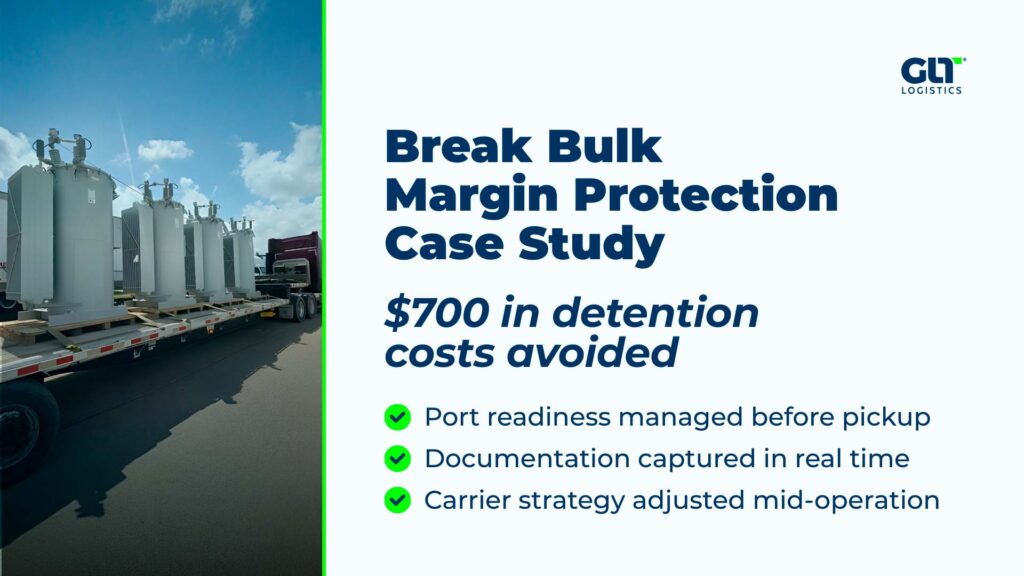
In a break-bulk project handled by GLT Logistics, the main risk wasn’t pricing.
It was everything around it:
- Cargo readiness issues that could trigger detention
- Exposure across seven trucks
- Pre-existing damage that could escalate into disputes
Instead of reacting after charges appeared, the operation was actively managed:
- Detention risk was identified and neutralized early
- Carrier strategy was adjusted mid-project
- Visual evidence was gathered in real time
The result:
$700 saved in detention fees, representing up to 16% of the project’s value, and a one-off shipment evolved into a long-term partnership.
This is how margin is protected in 2026: through execution, not negotiation.
What capacity strategies are working better than spot-only models in 2026?
As 2026 begins, logistics leaders are moving away from emotional capacity decisions.
Pure spot exposure creates volatility.
Rigid long-term contracts limit adaptability.
What is working now are hybrid capacity strategies that balance:
- Cost stability
- Service continuity
- Cash-flow protection
Industry research shows that overexposure to spot markets continues to increase volatility during disruptions.
The objective isn’t the cheapest truck.
It’s predictable outcomes under pressure.
Why is visibility no longer just a logistics “feature” in 2026?
Most organizations already have data.
In 2026, the challenge isn’t access to information, it’s alignment.
Data still lives in silos:
- Carrier systems
- 3PL platforms
- Internal teams working from different versions of the truth
BCG highlights that companies with integrated, end-to-end visibility resolve supply chain disruptions significantly faster than those relying on disconnected systems.
Proof from the field (Case Study)
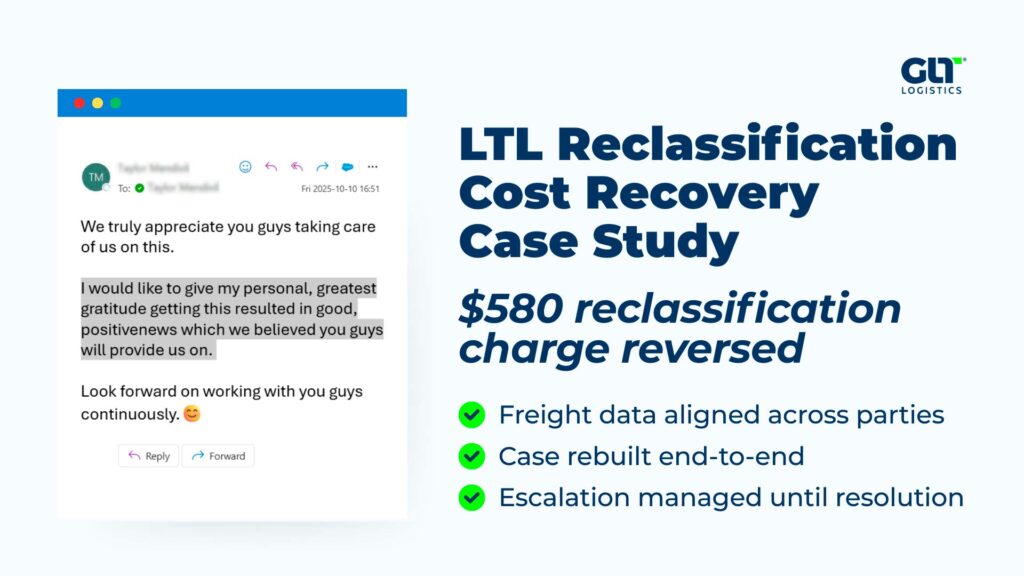
In an LTL shipment, a customer faced a $580 reclassification:
- Weight and dimensions were correct
- Documentation was validated
- Yet the dispute was denied, three times
What changed the outcome wasn’t more reporting.
It was alignment.
GLT Logistics rebuilt the case by connecting:
- Shipper data
- Consignee records
- Carrier system requirements
After structured escalation and persistence, the dispute was approved and the charge reversed.
In 2026, visibility doesn’t mean watching issues unfold.
It means making resolution possible.
How Are Logistics Operations Using Technology Differently in 2026?
The difference in 2026 isn’t more technology.
It’s technology with intent.
Deloitte continues to highlight that many digital supply chain initiatives fail when they focus on dashboards instead of execution.
Leading teams are using technology to:
- Reduce manual work
- Eliminate rekeying and transcription errors
- Enable faster, cleaner decisions
A real example at scale (Case Study)
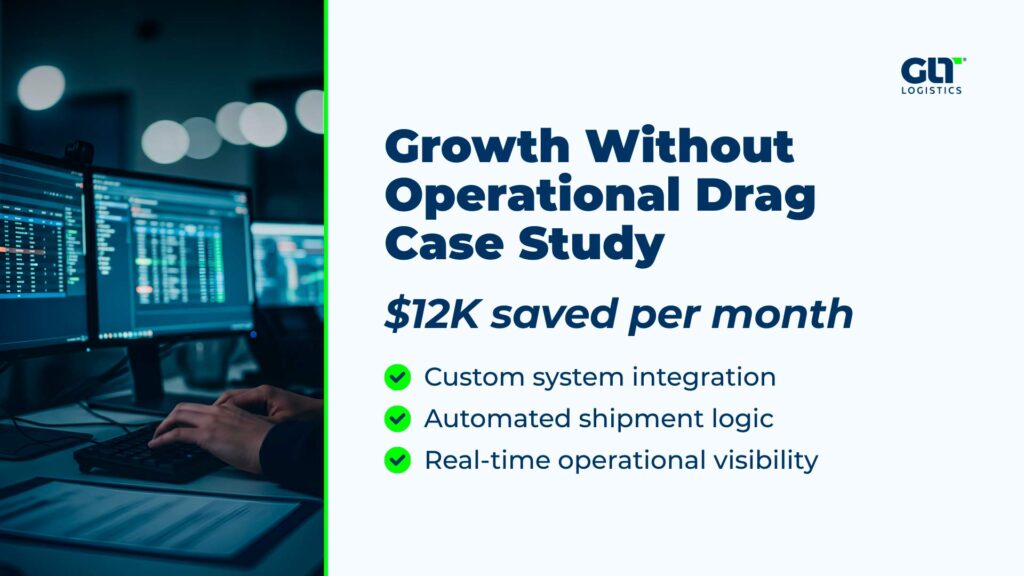
A global freight forwarder needed to scale U.S. domestic logistics operations.
They didn’t want to migrate systems.
They didn’t want multiple platforms.
GLT integrated directly into their existing technology:
- Custom API connection
- Automated shipment classification
- Carrier recommendations based on real performance
- Real-time updates across branches and customers
Results:
- ~$12,000 USD saved per month
- 83% year-over-year growth, followed by another 30%
- A complex domestic operation supported by just 10-12 people
This is what technology looks like in 2026 when it’s designed to remove friction, not add layers.
Which KPIs Are Most Important for Logistics Operations in 2026?
On-time delivery still matters.
Cost still matters.
But in 2026, logistics leaders are also measuring:
- Recovery speed
- Decision accuracy
- Operational resilience
BCG identifies resilience as a critical differentiator for protecting margin in volatile environments.
GLT’s operating model is built around these realities:
anticipate where possible, recover fast when needed, and protect the customer throughout the process.
Why are companies choosing operationally accountable 3PLs in 2026?
Because logistics today is no longer just outsourced transportation.
It is outsourced execution.
The companies staying in control in 2026 are working with 3PLs that:
- Anticipate risk
- Align systems
- Act before issues reach the customer
GLT Logistics operates as an extension of its customers’ teams, accountable, proactive, and built to protect freight, margin, and reputation.
If this is the level of execution you’re looking for in 2026, click here to submit your request, or contact us at request@goglt.com. We’ll help you optimize your logistics operations.