Mexico Freight Q2 Updates
& Key Actions
You Should Know
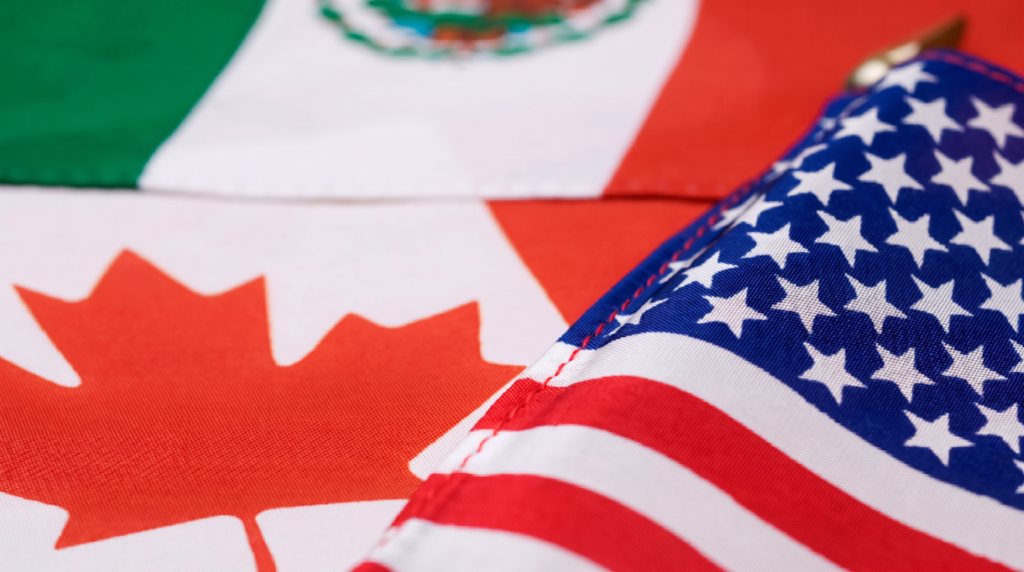
Tariffs in legal limbo, a T-MEC renegotiation coming in July, rising cargo theft, and a 56,000-driver shortage — North American supply chains are under pressure from every angle. This is what C-levels at freight forwarders and shippers need to know right now.
If you move freight between Mexico, the U.S., and Canada, 2026 is not business as usual. The rules — commercial, legal, and operational — are shifting faster than annual planning cycles can absorb.
This guide cuts through the Mexico freight noise. No generic advice or recycled buzzwords. Just the six most critical disruptions hitting cross-border supply chains right now, what the data actually says, and concrete steps to keep operations moving.
The Tariff Landscape After the SCOTUS Ruling
On February 20, 2026, the U.S. Supreme Court struck down tariffs imposed under IEEPA (International Emergency Economic Powers Act) in a 6-3 ruling. The immediate reaction from the White House was to pivot to Section 122 of the Trade Act of 1974, imposing a 10% global tariff effective February 24 — later raised to 15%.
The bottom line for cross-border freight
The war on tariffs didn’t end — it changed weapons. Section 122 expires on July 24, 2026, which means a new round of trade policy decisions is coming just as the T-MEC review kicks off. The freight market has been operating under what analysts call “sourcing paralysis” for months, with Class 8 truck orders at their lowest since May 2020 and some carriers reporting double-digit profit declines.
For Mexico freight forwarders and shippers: the risk is no longer just the tariff rate. It’s the volatility of not knowing what rate to plan around 90 days from now.
- Audit which of your entries were IEEPA-based vs. Section 232 — they have very different legal status today.
- Move quickly on IEEPA refund eligibility before CBP’s CAPE system launches; those who file early will have priority processing.
- Build tariff pass-through clauses into client contracts now — before July, not after.
- Don’t conflate tariff announcements with actual duties owed; Flexport’s analysis shows the gap between rhetoric and implementation has been consistently wide.
One of the most painful experiences for Mexico freight forwarders is discovering extra charges or tariff-related problems after the freight has already moved. Our team works ahead of the shipment — we explain what classifications apply, flag risks before they become surprises, and keep communication proactive at every stage. No post-delivery discoveries.
T-MEC/USMCA Renegotiation: What’s Actually at Stake
The 2026 T-MEC review was supposed to be procedural. It is not. The Trump administration has made clear it intends to examine every aspect of the deal, and the Center for Strategic and International Studies has called it “a defining test for North American cohesion and global competitiveness.”
Three areas with direct freight implications:
Rules of origin — could get tighter
The current threshold for North American content in automotive is 75%. A push to raise that bar, or extend similar requirements to electronics, aerospace, and medical devices, would force supply chain redesigns for many manufacturers. Any change to origin rules directly affects what can cross the border duty-free — and how you document it.
China-sourced intermediate inputs — the biggest wildcard
Approximately 40% of Mexico’s intermediate imports come from China. If new rules restrict or penalize those inputs, supply chains would need to be redesigned rapidly. For Mexico freight forwarders, this translates into clients scrambling to re-source, re-route, and re-document — all at the same time.
A potential new supply chain resilience chapter
Both the Baker Institute and Brookings have proposed adding a formal supply chain resilience chapter to T-MEC. If adopted, this would create new reporting, transparency, and compliance requirements for cross-border shipments — more complexity, more documentation, more need for knowledgeable partners.
Nearshoring vs. Infrastructure: The Gap Nobody’s Talking About
Mexico is now the largest trading partner of the United States, representing 15.5% of U.S. imports. Foreign direct investment hit $34.3 billion in 2025, a 10.2% year-over-year increase. By any measure, nearshoring is not a trend — it’s a structural shift that has already happened.
The problem? Infrastructure didn’t get the memo.
- Border crossings at Laredo, El Paso, and Nogales are running at or beyond capacity.
- Mexico’s logistics costs represent 12% of GDP — versus a 9% global average. That gap is real money.
- Multimodal connectivity between industrial corridors and border crossings remains fragmented.
- Digital adoption across logistics processes is still slow among mid-size carriers.
The good news: infrastructure projects are finally moving. The new Otay Mesa East port of entry (San Diego/Tijuana corridor) is opening in 2026. The Corredor Interoceánico del Istmo de Tehuantepec opens Atlantic-Pacific routing options. And the Green Corridors initiative (Monterrey–Saltillo–San Luis Potosí) is developing electrified trucking infrastructure for ESG-sensitive shippers.
With 23+ years operating Mexico freight, we don’t just know the routes — we know how they behave under pressure. We recommend border crossings based on your specific commodity, equipment needs, security profile, and timeline — not just what’s geographically closest. And when a crossing gets congested, we have alternatives already in play.
- LTL — 98% national coverage in Mexico
- FTL — Full real-time visibility, CTPAT-certified carriers
- Drayage — Direct container delivery to Mexico + cross-border to the U.S.
Cargo Theft in Mexico freight: New Tactics, New Hotspots
Mexico sees a cargo theft roughly every 38 minutes. In 2025, 82% of incidents were concentrated in two regions: Centro (51%) and Bajío (31%). The Bajío number grew by 7 percentage points year-over-year — making it the most-watched escalation in the country.
The four states accounting for 94% of Bajío incidents: Guanajuato (36%), Jalisco (22%), Michoacán (19%), and Querétaro (16%).
How organized crime is adapting
Criminal groups are no longer operating randomly. They’ve shifted to weekday operations (83% of incidents Monday–Friday), concentrated in the 18:00–24:00 window. The most targeted cargo: food and beverages (34%), industrial inputs (10%), auto parts (9%). The tactic of choice in the Bajío: intercepting trucks in transit — meaning thieves have operational intelligence about route and schedule.
- Avoid nighttime departures on the Bajío corridor (especially Highway 45D); schedule trips to arrive at secure facilities before 18:00.
- Require carriers to operate with ISO/IEC 27001-aligned tracking protocols — location data should be encrypted and access-restricted.
- Verify your Carta Porte documentation is flawless before every move — under 2026 customs reforms, a theft claim with irregular documentation can result in SAT fines in addition to the cargo loss.
- Diversify rest stops; preset checkpoints are increasingly targeted.
We don’t work with any carrier we haven’t personally vetted. Our validation protocol includes ownership verification (we only work with carriers who own their trucks — no broker chains), CTPAT certification review, and direct personal relationship with operators. We also only recommend routes and schedules that reflect current security conditions on the ground, not last quarter’s.
Carta Porte 3.0 and the Compliance Trap
If you’re moving Mexico freight — or crossing the border with a domestic segment — Carta Porte 3.0 is not optional. The SAT (Mexico’s tax authority) now requires a digital CFDI manifest for every shipment, including vehicle, driver, route, and cargo details.
The trap: under Mexico’s 2026 customs reform, if your cargo is stolen but the Carta Porte had any irregularities, you may not only lose the insurance claim — you may face SAT fines for failing to prove legal ownership of the goods in transit.
Cross-border complexity compounds this
For cross-border shipments, the Carta Porte process is more complex than intra-Mexico freight moves because customs brokers need to pull data from the carrier’s filing to complete clearance. This requires a clean data exchange chain between the shipper, the carrier, and the broker — and any gap in that chain creates delays or exposure.
- Verify that every carrier in your Mexico freight network is running Carta Porte 3.0-compliant software — not a previous version.
- Understand the distinction between what a customs broker handles (aduanal processes) and what your freight partner handles (transport and documentation). Confusing these roles causes delays and missed information.
- Review your cargo insurance clauses in light of 2026 customs reform — your policy coverage may be narrower than you think under CIF terms.
- Build Carta Porte data requirements into your shipper onboarding checklist — the sooner the right info is captured, the fewer the downstream problems.
We are a 3PL focused on transportation, not a customs broker. But we don’t leave you alone with the regulatory complexity. We walk you through every stakeholder — what the carrier needs, what the customs broker needs, what documents need to flow in which sequence, and what happens if something is missing. We’ve helped clients avoid fines and delays not by acting as their customs agent, but by making sure they arrive at their customs agent with everything in order.
The Driver Shortage That’s Quietly Tightening Capacity
Mexico freight is currently short 56,000 truck drivers. That gap is projected to reach 106,000 by 2028. This is not a future risk — it’s already affecting coverage, rates, and reliability today.
Drivers are leaving the profession primarily for two reasons: safety concerns and low wages. With cargo theft risk concentrated in specific corridors and schedules, many operators are either avoiding those routes entirely or demanding significant risk premiums to take them.
The U.S. side has its own pressure. The FMCSA has tightened English proficiency requirements and is scrutinizing foreign CDL validity, effectively reducing the pool of drivers who can legally operate cross-border. Canada is simultaneously cracking down on the “Driver Inc.” misclassification scheme, which could temporarily reduce carrier capacity as businesses restructure compliance.
- Ask your logistics partners directly: what is your carrier network’s driver retention rate? High turnover is an operational risk for your freight.
- Plan for longer lead times on booking, especially in the Bajío and northern border corridors.
- Build 2026 freight contracts to reflect realistic dwell times, detention costs, and capacity constraints — not best-case assumptions.
What GLT Logistics Does Differently in This Environment
Everything in this guide points to the same underlying challenge: Mexico freight is complex — not just logistically, but culturally, regulatorily, and commercially. The partners who add real value in 2026 are those who reduce that complexity, not those who just quote the lowest rate.
GLT Logistics has been operating in Mexico for over 23 years. We are bilingual, we understand the culture, and we have ground-level relationships with carriers, routes, and border crossings that take years to build. Here’s how that translates into real value right now:
On the documentation maze
Mexico freight requires significantly more documentation than U.S. or Canadian domestic freight. Most cross-border issues — delays, fines, cargo holds — trace back to documentation gaps. We guide clients through what the shipper needs to provide, what the customs broker needs, how those pieces connect, and what the timeline looks like. We put structure on what often feels like a disorganized process — because it’s not disorganized, it’s just unfamiliar.
On carrier quality
We personally know the carriers we work with. We only work with companies that own their own trucks — no multi-layer brokering. Every carrier we use holds CTPAT certification, which is the gold standard for U.S.-Mexico cross-border security compliance. This isn’t a checkbox — it’s a filtering mechanism that directly reduces theft and damage risk.
On visibility and communication
One of the most common pain points we hear from shippers new to Mexico freight: finding out about problems after delivery. We operate on a proactive model. FTL moves have full real-time visibility. Issues are communicated as they happen, not after. We own the problem when it’s our scope — and we’re clear about what’s outside our scope too.
On flexibility for any freight strategy
We’re built to handle the full range of cross-border scenarios — direct container delivery into Mexico, transloading and northbound movement to the U.S., door-to-door across all three countries, temperature-controlled, heavy haul, open deck. If your strategy changes because tariff conditions change, we adjust with you. We don’t lock you into a single routing model.
Three words come up consistently in client feedback: accountability, closeness, and transparency. Clients know that when we say something is handled, it’s handled — and when there’s a problem, they hear about it from us, not from their customer.
Ready to Simplify Your Mexico Freight?
Talk directly with a logistics expert who knows Mexico freight from the ground up — not a chatbot, not a junior rep.
No commitment. Just a real conversation about your Mexico freight.