Cargo theft losses hit an estimated $725 million in 2025, up 60% year over year, while fraud has shifted from stealing trailers to hijacking carrier identities online. California and Texas remain the two most exposed states, and food, beverage, and electronics freight draw the sharpest targeting. This guide breaks down the 2026 data, the fraud tactics driving it, and the cargo theft prevention strategies shippers and forwarders can use before peak season.
Cargo theft prevention strategies matter most right before shipment volumes climb, and that is exactly where most shippers are right now. Confirmed cargo theft incidents in the U.S. and Canada rose 18% in 2025, to 2,646 events, according to Verisk CargoNet. The FBI’s Internet Crime Complaint Center has also flagged a newer threat: criminals who never touch a truck, but instead hijack a carrier’s identity online to walk off with a full load. For shippers and forwarders moving high-value or temperature-sensitive freight through Texas, California, or the Mexico border corridor, these shifts matter before a shipment ever leaves the dock.
Thieves are getting more selective, not more frequent. The average value stolen per theft rose 36% in 2025, to $273,990. Fewer thefts are doing more financial damage, and a single bad pickup can now cost a shipper six figures, plus the fallout when a buyer never receives their order.
Why Cargo Theft Prevention Strategies Matter More in 2026
Cargo theft prevention strategies matter more in 2026 because losses are concentrating, not spreading out. Verisk CargoNet counted 2,646 confirmed thefts in 2025, up 18% year over year. Total losses rose 60%, to roughly $725 million. Criminals are targeting fewer, higher-value loads, which raises the stakes of every pickup.
The per-incident numbers make this clear. CargoNet’s analysis, published January 22, 2026, put the average loss per theft at $273,990, a 36% jump from 2024. Broader supply chain crime events stayed roughly flat, at 3,594. Criminal groups are not casting a wider net. They are picking targets more carefully.
That selectivity is why one high-value truckload a month can now carry more risk than ten low-value loads a week.
How Carrier Identity Fraud and Fictitious Pickups Work
Carrier identity fraud lets thieves claim a real load without stealing a truck. The FBI and its Internet Crime Complaint Center warned on April 30, 2026 that criminals compromise carrier and broker accounts, post fake loads on load boards, and alter a carrier’s FMCSA and insurance records to redirect freight.
The FBI’s public service announcement, PSA260430, lays out a clear pattern. Attackers first get into a broker or carrier’s email or load-board account, usually through a spoofed message or fake link. They then post fake loads, sometimes tens of thousands at once, using that account’s credibility. Carriers who bid on those loads receive a fraudulent carrier-broker agreement. From there, attackers accept real loads and quietly double-broker them to unsuspecting drivers using altered paperwork. Once cargo reaches a complicit driver, some attackers demand a ransom just to reveal where it went.
Where the Risk Concentrates: California, Texas, and the Border Corridor
Cargo theft in the U.S. still concentrates heavily in California and Texas, the two states that also carry the most Mexico freight services volume across the southern border. CargoNet recorded 1,218 incidents in California in 2025, more than any other state, with Texas and Illinois close behind.
The geography inside California is shifting. Los Angeles County incidents fell 11% in 2025, while Kern County rose 82% and San Joaquin County rose 44%. Both are inland corridors that carry heavy full truckload capacity and container drayage volume rather than coastal port traffic. New Jersey, Indiana, and Pennsylvania posted the largest percentage gains nationally, though their totals still trail California and Texas in raw incident count.
| State | 2025 Incidents | Trend |
|---|---|---|
| California | 1,218 | Shifting inland to Kern & San Joaquin counties |
| Texas | Top 3 nationally | Steady, border-corridor exposure |
| New Jersey | Up 50% YoY | Fastest-growing Northeast hot spot |
| Indiana | Up 30% YoY | Rising Midwest exposure |
| Pennsylvania | Up 24% YoY | Linked to NJ/NYC metro theft rings |
More recent data points the same direction. A CargoNet and Overhaul breakdown of Q2 2026, reported by FoodNavigator on October 16, 2026, found California made up 34% of U.S. incidents that quarter, with Texas adding another 18%. More than half of all U.S. cargo theft that quarter happened in just two states. For freight crossing through Texas and Mexico border points, that overlap between theft hot spots and cross-border lanes is no coincidence. It is a reason to treat carrier vetting as seriously as customs paperwork.
What Freight Gets Targeted Most Often
Food and beverage freight is now the single most targeted category, with 708 confirmed thefts in 2025, up 47% from 2024. Metals theft rose 77% on copper demand, and enterprise computing hardware, including RAM modules and storage drives, remains a top target for organized groups.
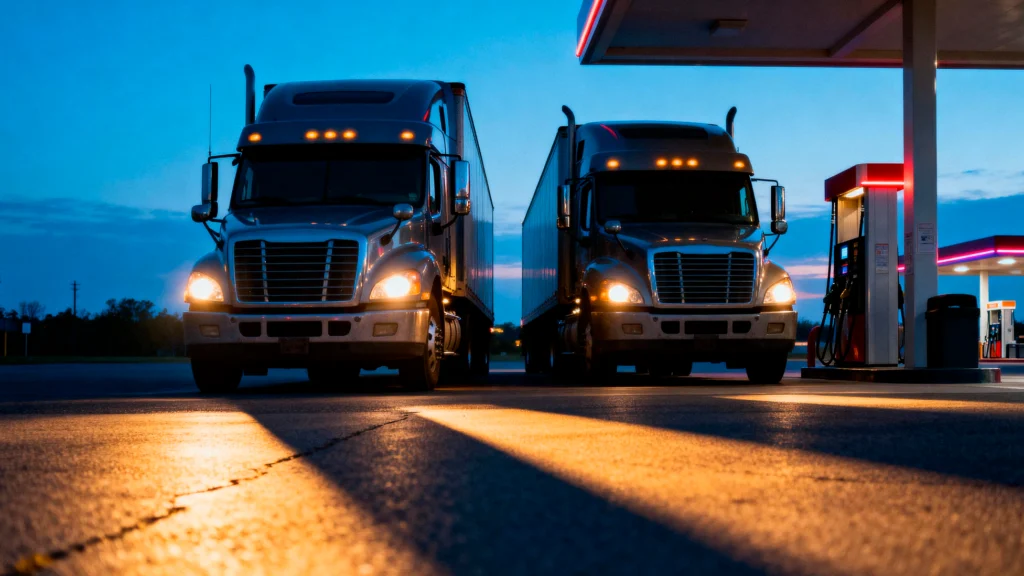
The food and beverage pattern breaks down by region. Meat and seafood theft concentrated in the Northeast, especially New Jersey, while tree nut theft clustered on the West Coast. That split matters for anyone running temperature-controlled trucking, since refrigerated loads often sit unattended longer at fuel stops and distribution centers, the two location types CargoNet and Overhaul both flag most often.
Vehicle parts and engines bound for assembly plants stayed attractive through 2025 too. CargoNet expects enterprise technology, tied to AI and data-center buildouts, to remain a top target through 2026, as criminal groups chase the highest resale value per trailer.
Why Peak Season Raises the Stakes
Holiday and peak-season freight draws more theft because staffing drops and time pressure rises exactly when shipment volumes peak. CargoNet’s five-year Labor Day review found 273 incidents clustered around that single long weekend, worth an estimated $31.8 million, with Friday the single most common theft day.
This pattern is not unique to Labor Day. CargoNet’s September 4, 2026 release, covering 2021-2025 data, found food and beverage was the largest commodity share even in that short holiday window, followed by household goods and electronics. Those same categories spike again around Thanksgiving and the winter holidays. The report also flags a less physical risk: reduced staffing and compressed deadlines make it easier for someone impersonating a dispatcher or carrier to go unquestioned.
The first half of 2026 reinforces the trend. CargoNet’s Labor Day release cites cargo theft losses exceeding $359 million industry-wide in the first six months of the year, with the average stolen shipment value near $341,518. Both figures run ahead of the full-year 2025 pace. Shippers planning Q4 volume increases are, in effect, planning their highest-risk freight of the year.
Core Cargo Theft Prevention Strategies for Shippers and Forwarders
The strongest cargo theft prevention strategies combine carrier vetting, a second verification channel for pickup changes, and insurance that matches the freight’s real value. None of these require new technology. Most require a shipper to slow down exactly when a dispatcher is pushing to move faster.
A few practices show up consistently across the FBI’s PSA and the DOT’s own request for industry input on cargo theft, published September 16, 2025:
- Verify any pickup-detail change through a second channel, such as a phone call to a known number, before releasing a load.
- Treat a familiar name or email address as unverified; confirm unexpected requests directly with the carrier.
- Watch for lookalike domains or minor misspellings in dispatcher and broker email addresses.
- Monitor your carriers’ FMCSA registration and insurance filings for changes you did not authorize.
- Require CTPAT certification, or an equivalent vetting standard, for any carrier handling cross-border or high-value freight.
- Match cargo insurance limits to the freight’s actual replacement value, not a flat default.
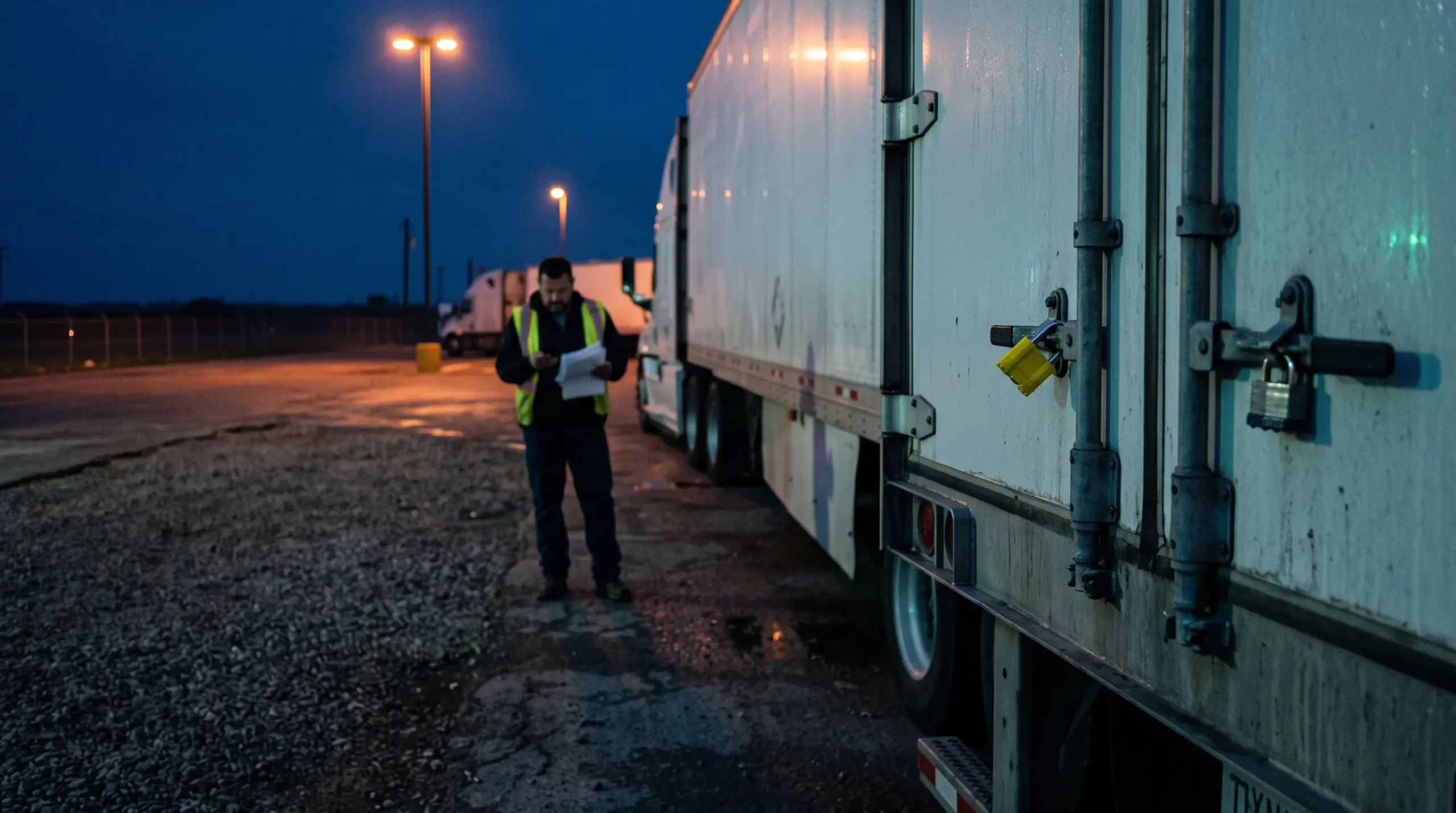
- Avoid leaving loaded trailers unattended overnight at fuel stops or distribution centers when a secured yard is available.
Carrier vetting deserves particular weight here, since the FBI’s own warning centers on fraudulent carrier identities, not physical break-ins. Working only with carriers that are personally vetted and CTPAT-certified, a standard practice GLT applies to every contracted carrier, closes off the exact gap the FBI describes: a thief posing as an already-approved operator.
None of these cargo theft prevention strategies work without a carrier network a shipper can trust. That standard is built in from day one: every contracted carrier is CTPAT-certified, owns its own equipment, and is reviewed personally before it hauls a load, with 24/7 shipment visibility layered on top. For shippers moving refrigerated, high-value, or cross-border freight, that combination sits behind GLT’s cargo insurance coverage, built to match real freight value rather than a flat rate.
FAQ — Cargo Theft Prevention
Ready to Lock Down Your Freight Before Peak Season?
Talk directly with a logistics expert who vets every carrier personally and builds cargo insurance around your real freight value — not a chatbot, not a junior rep.
No commitment. Just a real conversation about your freight.